Sacred festivals & rustic dance
HecateridesἙκατερίδες
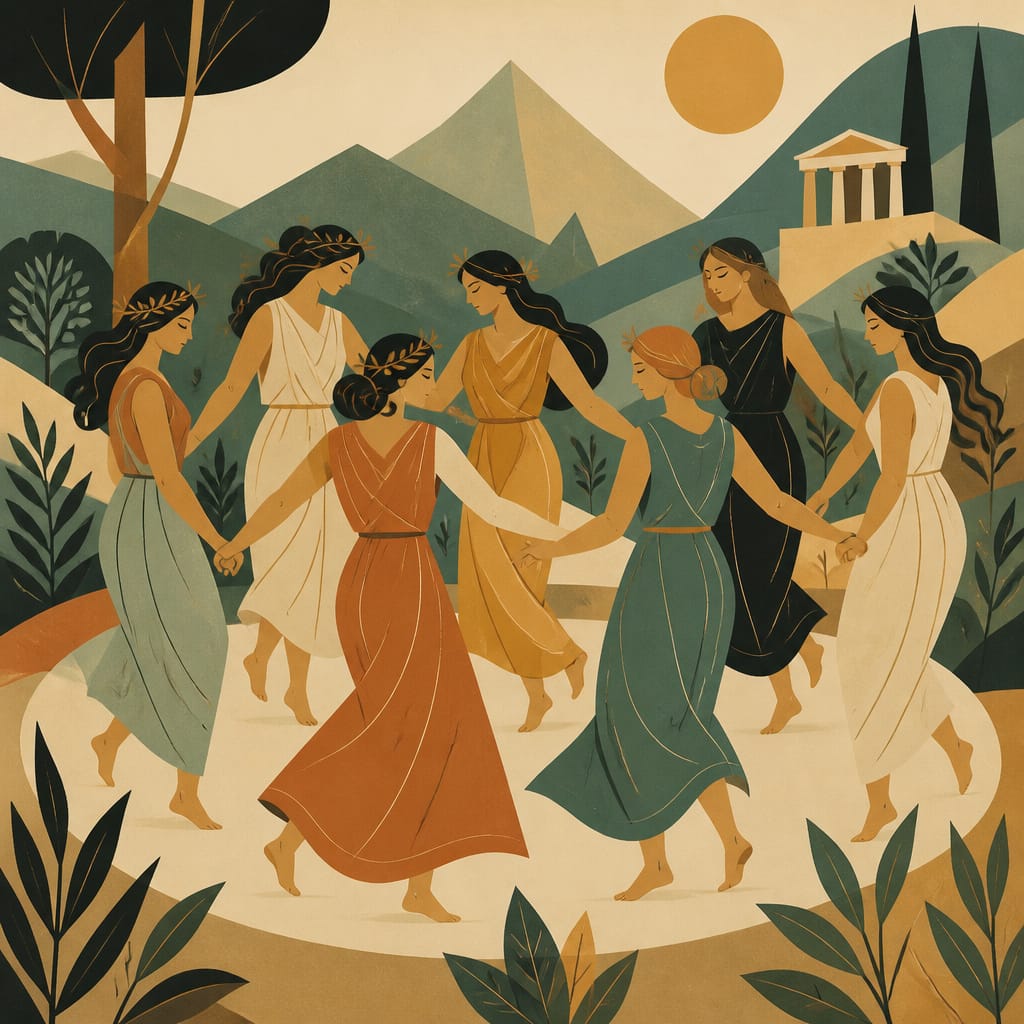
Rustic dancing nymphs associated with sacred festivals, mountain celebrations, and ecstatic ritual. They move in the measured circle of the dance.
Dance · Mystery · Ecstasy · Wine · Music · Honey
ἄλλαι Νύμφαι — the countless local spirits
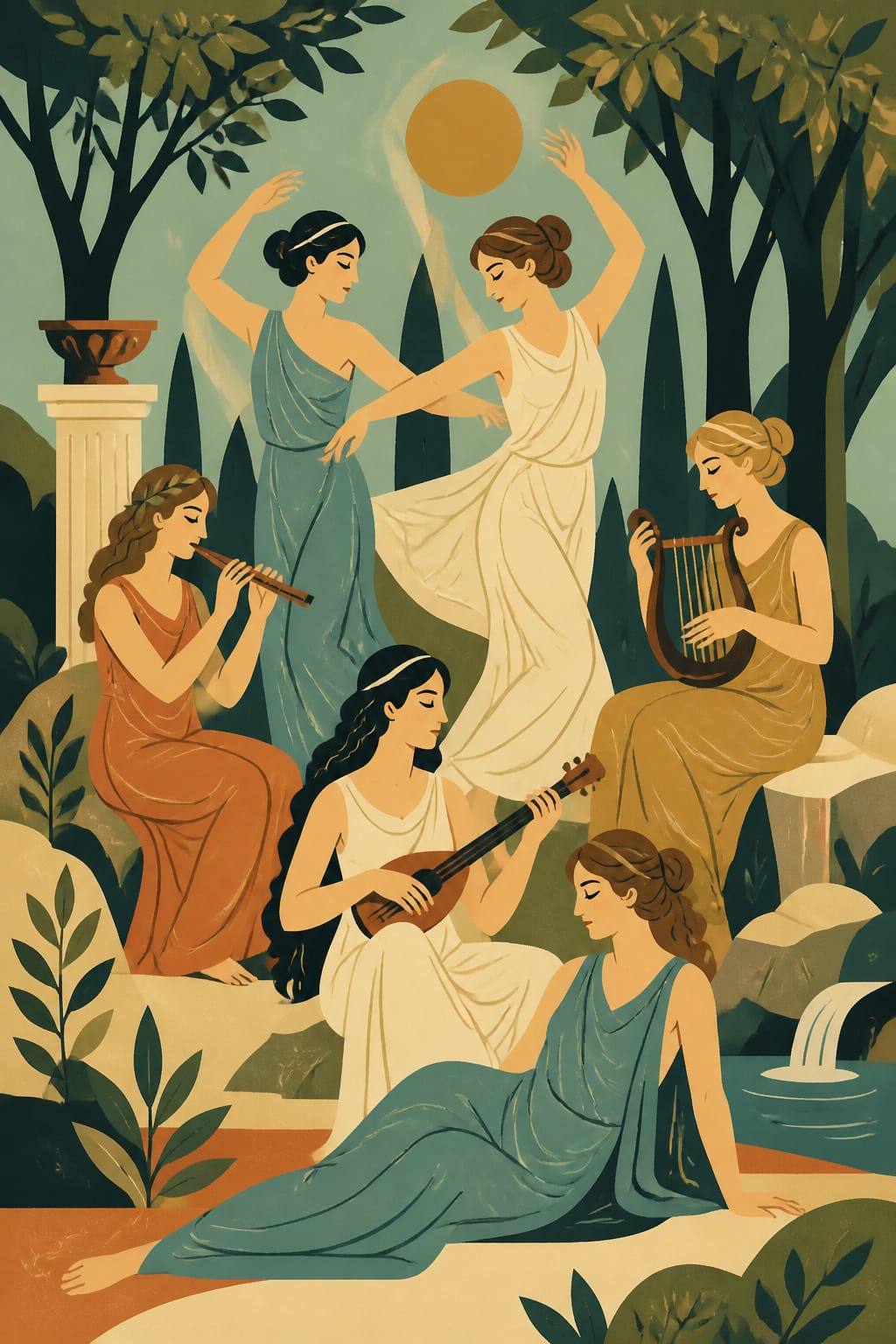
Beyond the great families lie the innumerable local spirits: of dance, mystery, sacred wine, music, and honey. Each rite has its own nymph, if only we learn her name.
The Greek world was not populated only by the five great families of Nymphai. It was crowded with local spirits — the Hecaterides of the rustic festival, the Kabeirides of the mystery cult, the Maenads who follow Dionysus, the Lenai of the wine press, the Mimallones of sacred music, and the Melissae of the beehive. Each is a particular power made conscious, a particular rite or gift given a name and a temperament.
These nymphs often slip between categories. A festival is both place and action; a mystery is both secret and revelation; honey is both food and oracle. The specialized nymphs teach us that the divine world is not divided into neat kingdoms but is a continuum of living powers, each with its own guardian and its own right to be honoured.
In myth, these are the nymphs who lead the dance, who keep the secrets of the mysteries, who press the sacred wine, who speak through the bees, and who fill the night with music. They are the most immediate and the most personal of the divine powers. To know them is to become a participant in the sacred life of the world.
The specialized nymphs are named by the rites and gifts that do not fit the great families — the dance, the mystery, the wine, the music, the honey.
Sacred festivals & rustic dance
Rustic dancing nymphs associated with sacred festivals, mountain celebrations, and ecstatic ritual. They move in the measured circle of the dance.
Mystery cults & secret rites
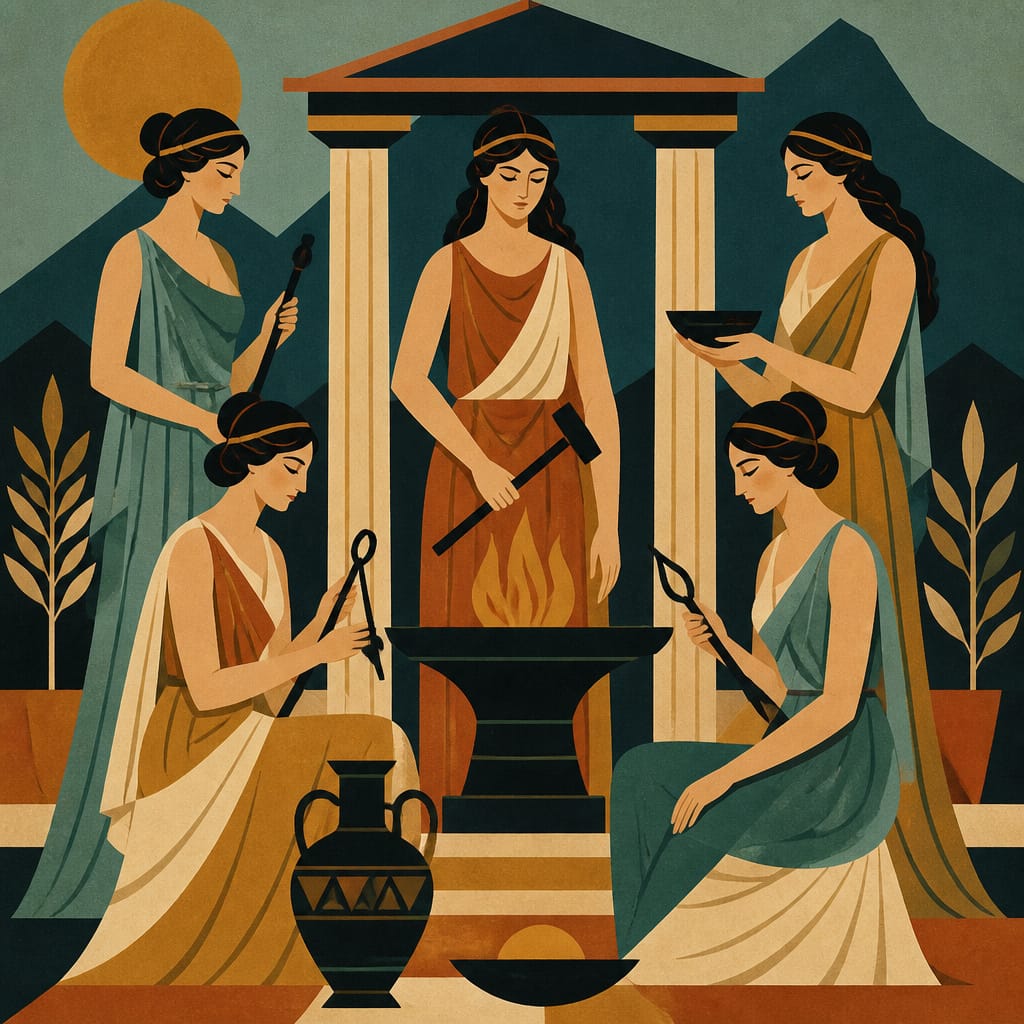
These mysterious nymphs belong to the secretive cult of the Kabeiroi and were connected with ancient mystery traditions and the hidden gods of the forge.
The Dionysian revel
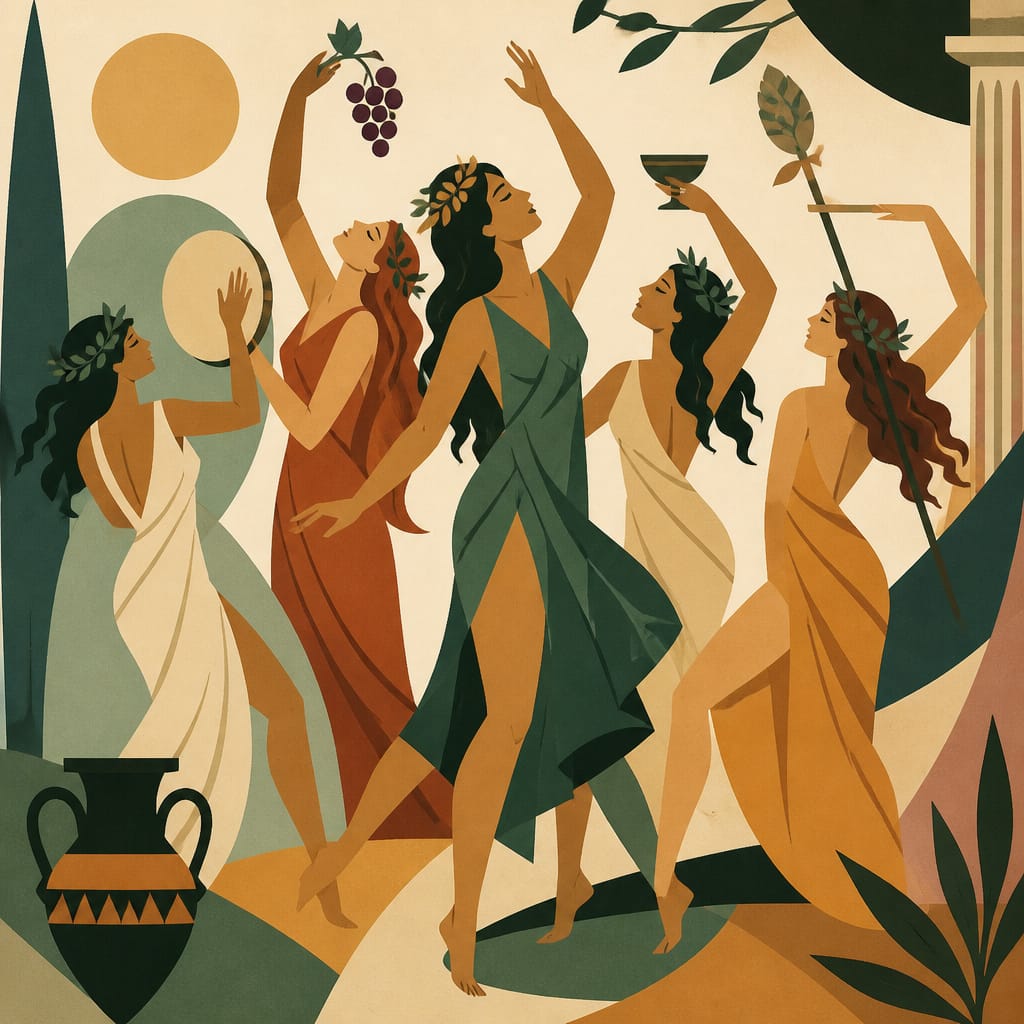
The Maenads are ecstatic female companions of Dionysus. Filled with divine inspiration, they dance, sing, and celebrate the liberating power of the god.
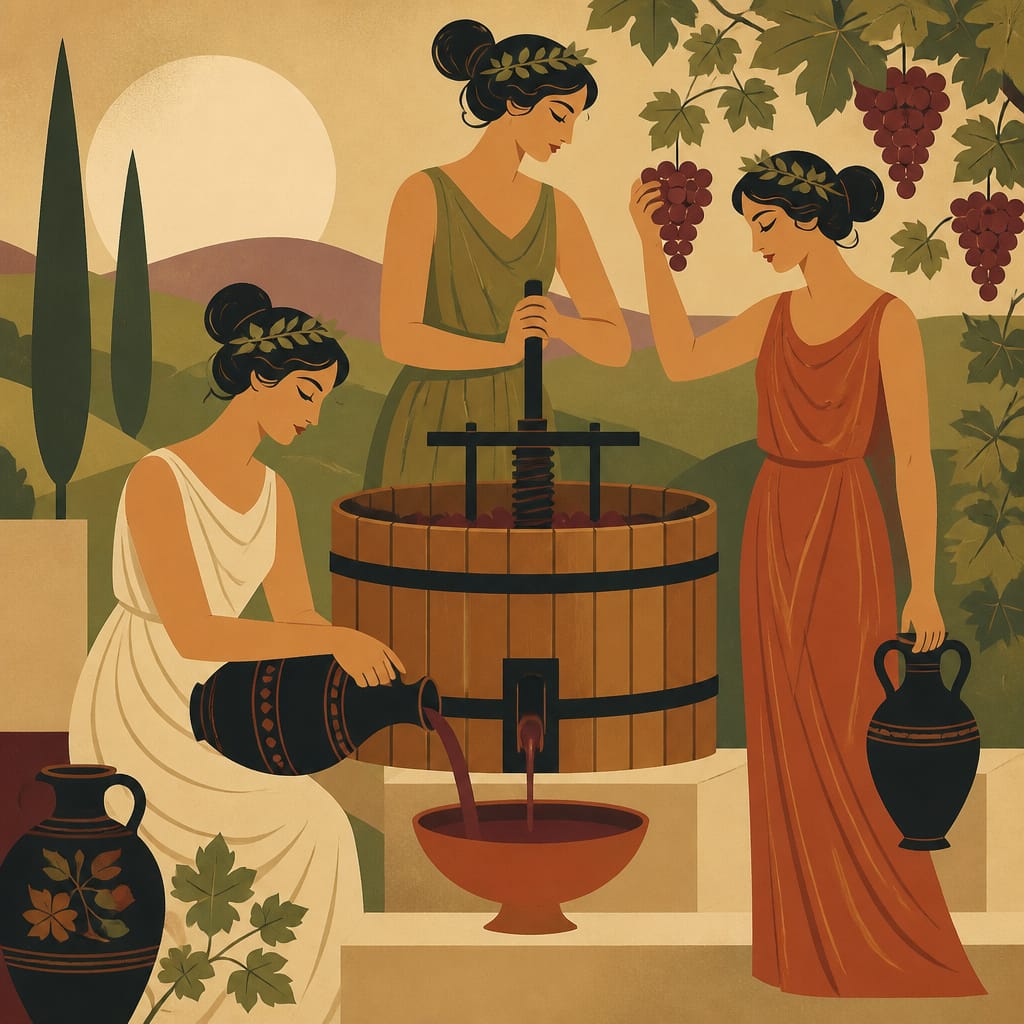
The wine press & vintage
The Lenai are nymphs connected with the wine press and the making of sacred wine during Dionysian festivals. They preside over the miracle of fermentation.
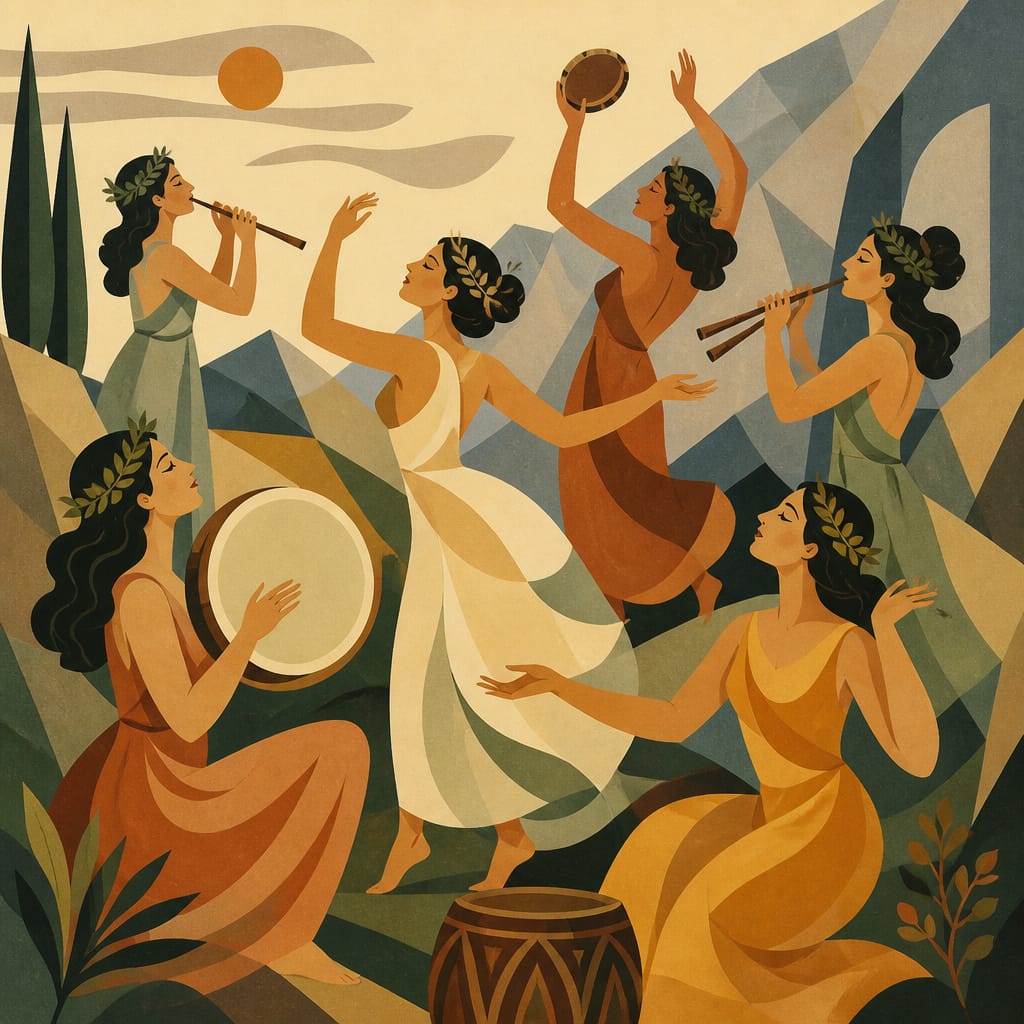
Sacred music & ritual song
These nymphs are associated with sacred music, ritual dance, and ecstatic celebration in honor of Dionysus. They fill the mountains with flute and drum.
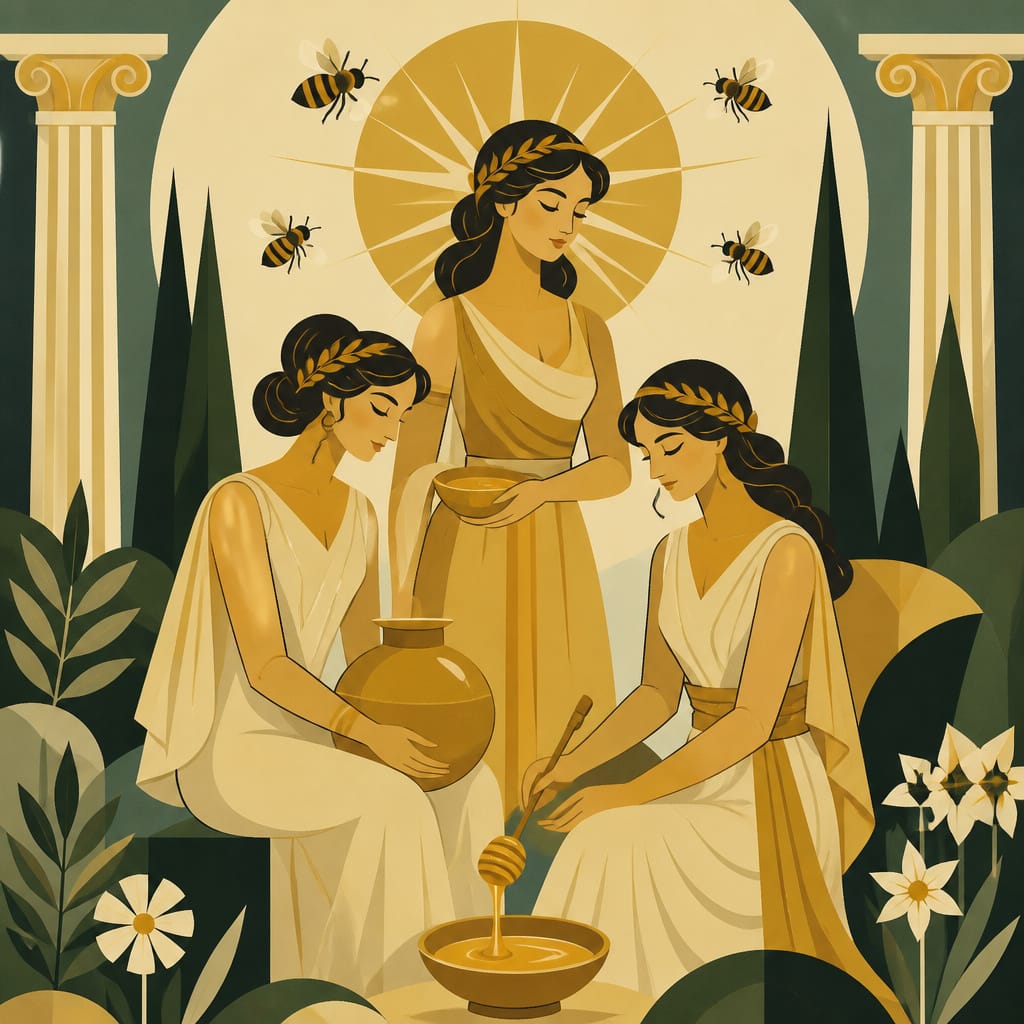
Bees, honey & prophecy
Known as the "Bee Nymphs," the Melissae are connected with honey, bees, sacred priestesses, prophecy, and divine nourishment. Bees were considered sacred messengers between the gods and humanity.
A chorus from the countless local spirits — those remembered by dance, mystery, the wine press, sacred music, and the golden hive.
The Five Hecateridesαἱ Ἑκατερίδες
The rustic dance
The five daughters of Hecaterus, mothers of the Satyrs and Oreads, whose quick-handed dance set the pattern for the sacred hekateris.
The Three Kabeiridesαἱ Καβειρίδες
The Samothracian mysteries
Three nymphs of the secret rites of Samothrace, sisters of the Kabeiroi and keepers of the island's orgiastic mysteries.
AgaveἈγαύη
Theban Maenad
Daughter of Cadmus who, in Dionysiac frenzy, led the Maenads to tear apart her son Pentheus; the most famous of the Theban Bacchae.
Ino-LeukotheaἸνώ / Λευκοθέα
Theban Maenad & sea goddess
Sister of Semele and aunt of Dionysus; a Maenad of Thebes who became the sea-goddess Leucothea and rescues sailors from drowning.
AutonoeΑὐτονόη
Theban Maenad
Daughter of Cadmus and mother of Actaeon; she joined the god's revels on Mount Cithaeron and was among the destroyers of Pentheus.
SemeleΣεμέλη
Mother of Dionysus
The Theban princess beloved of Zeus; consumed by his thunderbolt, she was reborn from the underworld and became a divine Maenad in her son's train.
The Minyadesαἱ Μινυάδες
Orchomenian Maenads
The three daughters of King Minyas of Orchomenus—Leucippe, Arsippe, and Arsinoe—who refused Dionysus and were driven to madness as punishment.
LeucippeΛευκίππη
Daughter of Minyas
One of the three Minyades; her name means 'white horse,' and she shared the terrible fate of her sisters for denying the god.
Arsippe / AlcithoeἈρσίππη / Ἀλκιθόη
Daughter of Minyas
One of the three Minyades; in some accounts called Alcithoe, she was transformed into a bat or driven mad for scorning the Dionysian rites.
ArsinoeἈρσινόη
Daughter of Minyas
The third of the Minyades; her name means 'rise of mind,' and she shared the punishment of her sisters.
The Lenaiαἱ Λῆναι
The wine press & Lenaia
Nymphs of the wine press and the Lenaia festival, who preside over the first pressing of the sacred vintage and the fermentation of Dionysus's gift.
The Mimallonesαἱ Μιμαλλόνες
Macedonian Maenads
The Macedonian Maenads, also called Klodones, who followed Dionysus Pseudanor with wild music, dance, and the din of tambourines.
MelissaΜέλισσα
First bee-nymph
The nymph who discovered honey and taught mortals its use; from her the bee-priestesses took their name, and bees themselves were named.
The Melissae of Delphiαἱ Μέλισσαι
Bee-priestesses of Apollo
The priestesses of Apollo at Delphi were called Melissae, sacred messengers between gods and humanity, pure as the bee.
The classical offering to a specialized nymph is given at the specific place she inhabits — the island, the marsh, the meadow, the shore — and is shaped by its character.
The specialized nymphs are local powers who know their own ground. The chief offence is to treat their place as nothing special.
"Nymphs of the island, the shore, the marsh, and the glen,
who dwell in the small places between the great waters and the high hills,
who know each stone and root and turning of the tide —
come, local ones, with generous and watchful heart,
and bless the one who tends the place you love."
After the Orphic Hymn to the Nymphs (No. 51)