01
The Place Is the Goddess
To honor a Nymph is to honor the body she inhabits — the spring, the grove, the slope, the meadow. There is no devotion that leaves the place poorer. Harm to her water or her wood is harm to her.
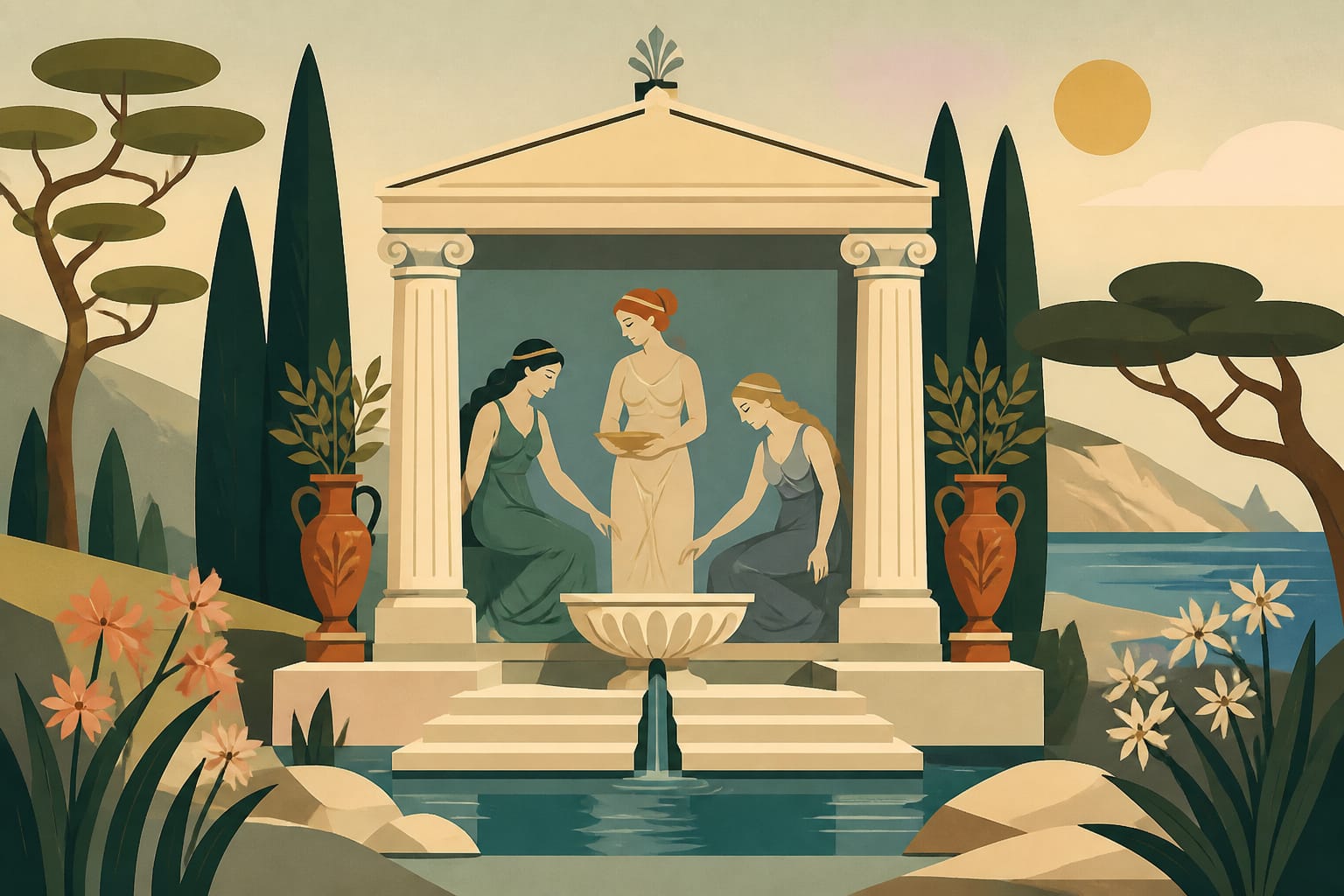
To love the Nymphai is to love the bodies they wear — the living water, the rooted wood, the high stone. Devotion in our age cannot be separated from the work of tending, defending, and restoring the wild places where they dwell.
We inherit a tradition older than any temple we have ever entered, and a world wounded as none of its first keepers could have imagined. Rivers have been buried beneath cities. Groves have been felled for fields, and fields for asphalt. Springs whose names were once whispered in prayer now run from plastic taps, if they run at all.
In such an age the devotion of the Nymphai cannot be only a private sweetness — a candle on a shelf, a hymn at the kitchen window. It must also become a stance: a way of standing among other mortals on behalf of the unspeaking lives we have been taught to love. Devotion grows ears and hands. It learns to plant, to clean, to refuse, to speak.
The moral grammar of this devotion — simple, demanding, and unchanged across two and a half thousand years.
01
To honor a Nymph is to honor the body she inhabits — the spring, the grove, the slope, the meadow. There is no devotion that leaves the place poorer. Harm to her water or her wood is harm to her.
02
Before drawing from a spring, gathering from a tree, or walking upon wild ground, pause. Ask. Receive only what is freely given. Use is not forbidden — extraction without thanks is.
03
Of any wild gift — the last bloom on the stem, the last fruit on the bough, the final fish in the pool — leave it. The Nymph keeps her share. So does the next traveler.
04
The Nymphai have no vote, no lawyer, no microphone. The devotee is, in part, their advocate among mortals — wherever the grove is felled or the spring poisoned, the devotee bears witness.
05
A shrine is a place of meeting, not ownership. The Nymph is not yours; she is the river's, the meadow's, her own. Devotion is the guest's bow at the door.
Each kindred of the Nymphai lives in an ecological body that we, as devotees, are bound to tend. Devotion becomes ecology becomes politics becomes love.
Water
Defend springs and rivers from pollution. Drink local where possible. Tend wells. Refuse single-use plastics where a refill will do. Carry out more litter than you bring.
Trees
Plant native species. Do not strip living bark or break green branches for ornament. Resist the felling of old growth — a hundred-year tree is a hundred-year shrine.
Mountains & Stone
Stay on the path; the slope is fragile. Do not carry stones home from sacred peaks. Speak against quarrying and strip-mining of holy ground.
Meadows & Bloom
Let a corner of the garden grow wild. Sow native wildflowers. Refuse pesticides that kill the bees who serve the Anthousai. Mow late, mow seldom.
Sea
Treat the shore as the threshold of a temple. Carry no plastic to the tide. Eat from the sea sparingly and seasonally. Support the work of those who clean the waters.
The old taboos must learn new names. These prohibitions are not arbitrary; each protects the Nymph's body, her dignity, or the integrity of the devotion itself.
Four convictions for the next generation of devotees — those who will keep the spring flowing long after we are gone.
The future of this devotion is not a museum. It is a living tradition that grows where it is planted — in the bioregions, watersheds, and back gardens of those who keep it. The Hellenic root remains; the branches reach toward local soil.
Nymph devotion resists the marketplace of spirituality. It will not photograph well. Its growth will be measured not in followers but in cleaner rivers, replanted groves, and quieter shrines that outlast their keepers.
Though the practice is intimate, it asks for community: watershed councils, grove-tenders, neighbors who keep the well together. Devotion to the Nymphai is, in the end, a politics of place.
We inherit a wounded world. Part of devotion now is restoration — of the daylit stream once buried in a culvert, of the meadow paved into a parking lot. Where the Nymph's body has been broken, the devotee helps it heal.
"I will leave the spring cleaner than I found it.
I will leave the grove standing.
I will leave the mountain unmarked.
I will leave the meadow blooming.
And if I cannot leave them so —
I will labor, in this life, until I can."
— The Devotee's Vow