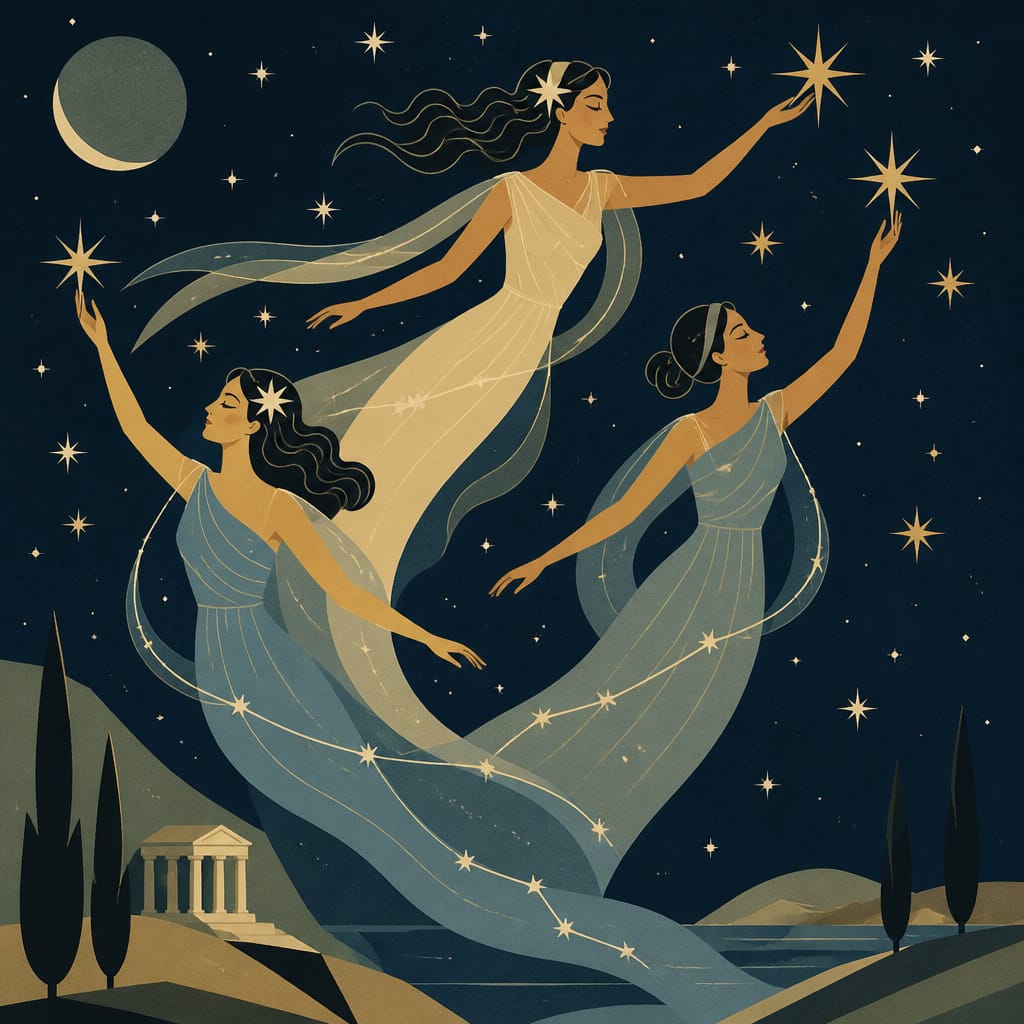
Stars & constellations
AsteriaiἈστέριαι
Nymphs of the stars themselves — born from the aether, they dance across the night sky and guide mortals by their fixed patterns.
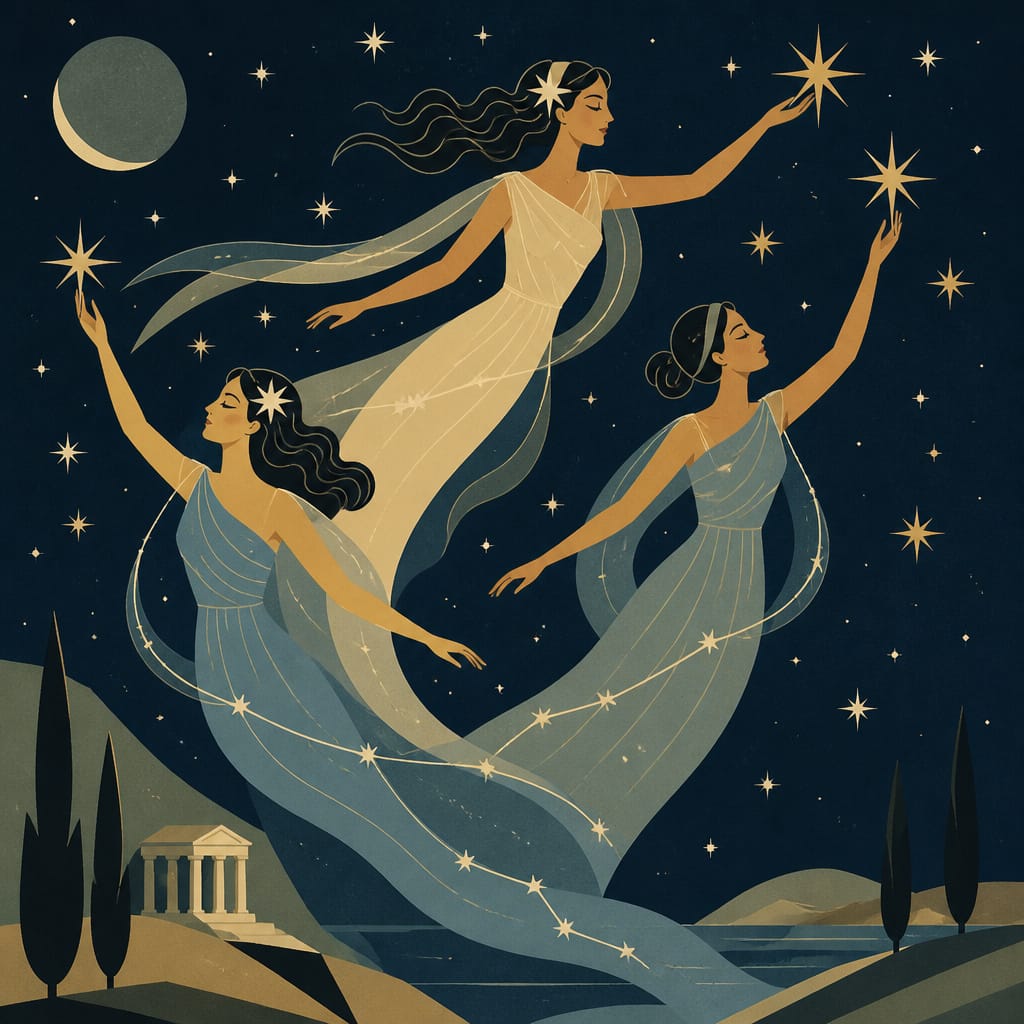
Stars · Dusk · Heaven · Upper Air
Ἀστέριαι — daughters of the sky
Spirits of the stars, the dusk, and the upper air. They dance between the clouds and the fixed constellations, keeping the ancient order of the heavens.
The Celestial Nymphs are the least earthly of the Nymphai — spirits of the sky, the stars, the dusk, and the rain-bearing clouds. They are not bound to springs or trees, but to the great dome above: the Asteriai who dwell as living stars, the Hesperides who guard the sunset, the Pleiades and Hyades whose risings mark the seasons, and the Lampetiai who carry the radiance of heaven itself.
In the ancient reckoning, the boundary between earth and sky was not absolute. The Pleiades were mountain nymphs before they became stars; the Hyades were rain- bringers who wept from the clouds. The heavens were alive, populated by divine attendants who moved the seasons, lit the night, and gave mortals the first calendar by which to plant, sail, and celebrate.
To honour them is to look upward with attention. It is to know the names of a few constellations, to notice the moon's phase, to greet the evening star, and to accept that the sky is not empty but inhabited by powers as ancient as the earth below.
The celestial nymphs are named by their place in the sky — stars, dusk, storm, and the luminous upper air.
Stars & constellations
Nymphs of the stars themselves — born from the aether, they dance across the night sky and guide mortals by their fixed patterns.
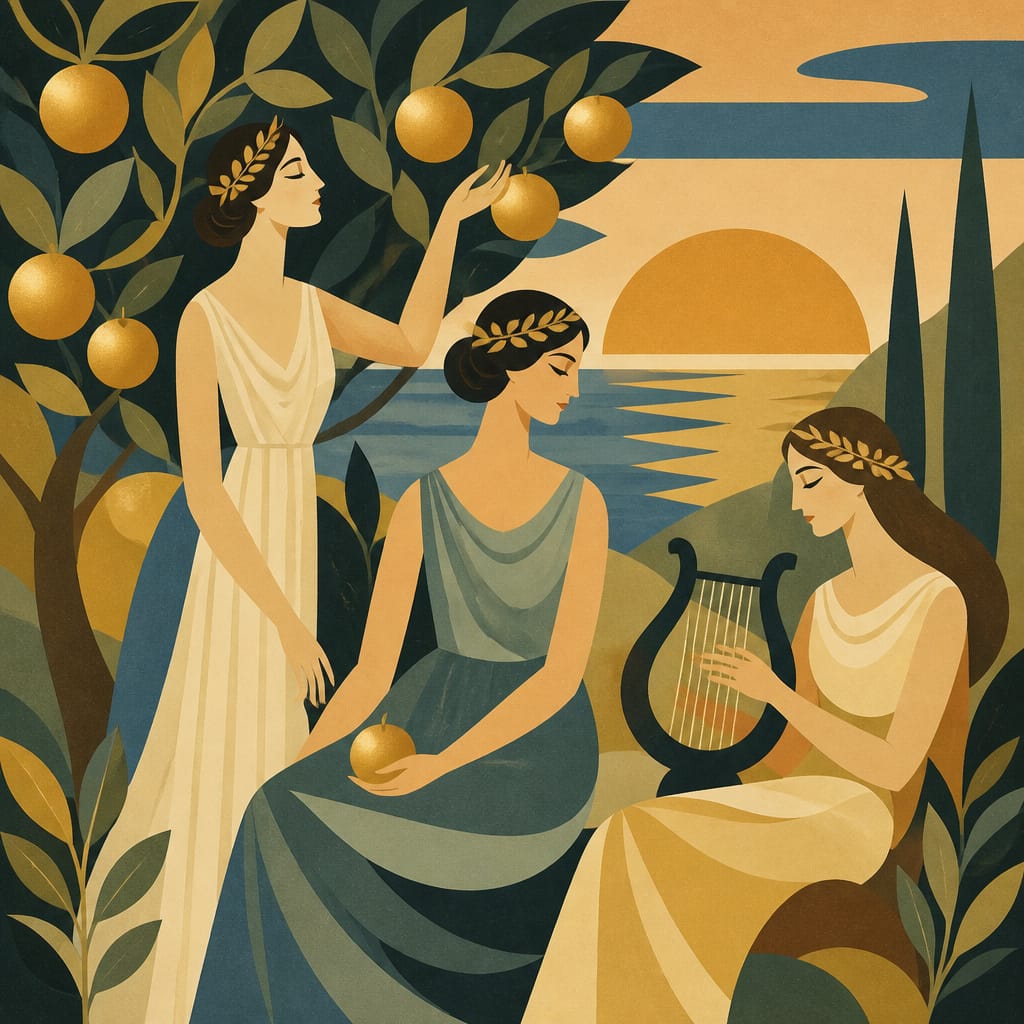
Evening & sunset
Daughters of the evening, guardians of the golden garden where the sun goes to rest. They sing the day into dusk.
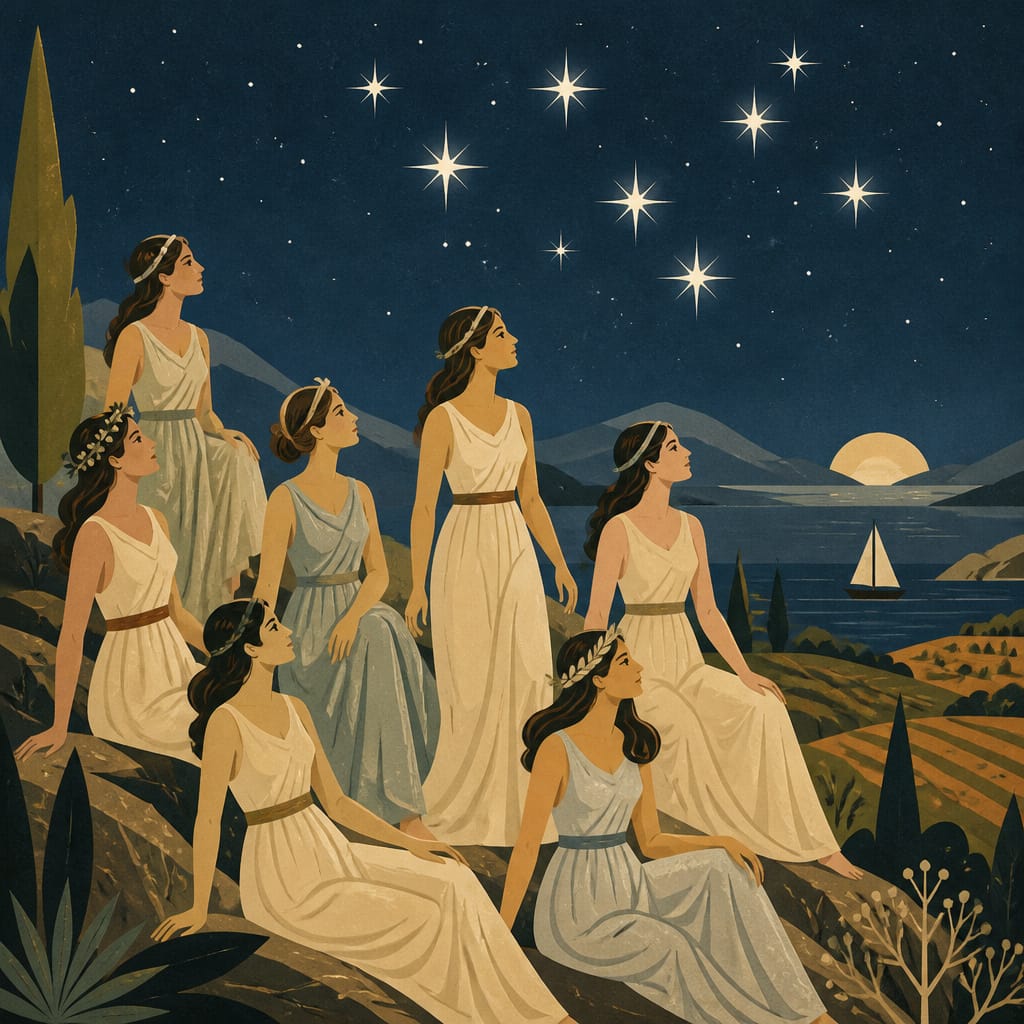
The seven-star cluster
Seven sisters transformed into stars, Oreads before they ascended. Their rising and setting mark the seasons of sail and plough.
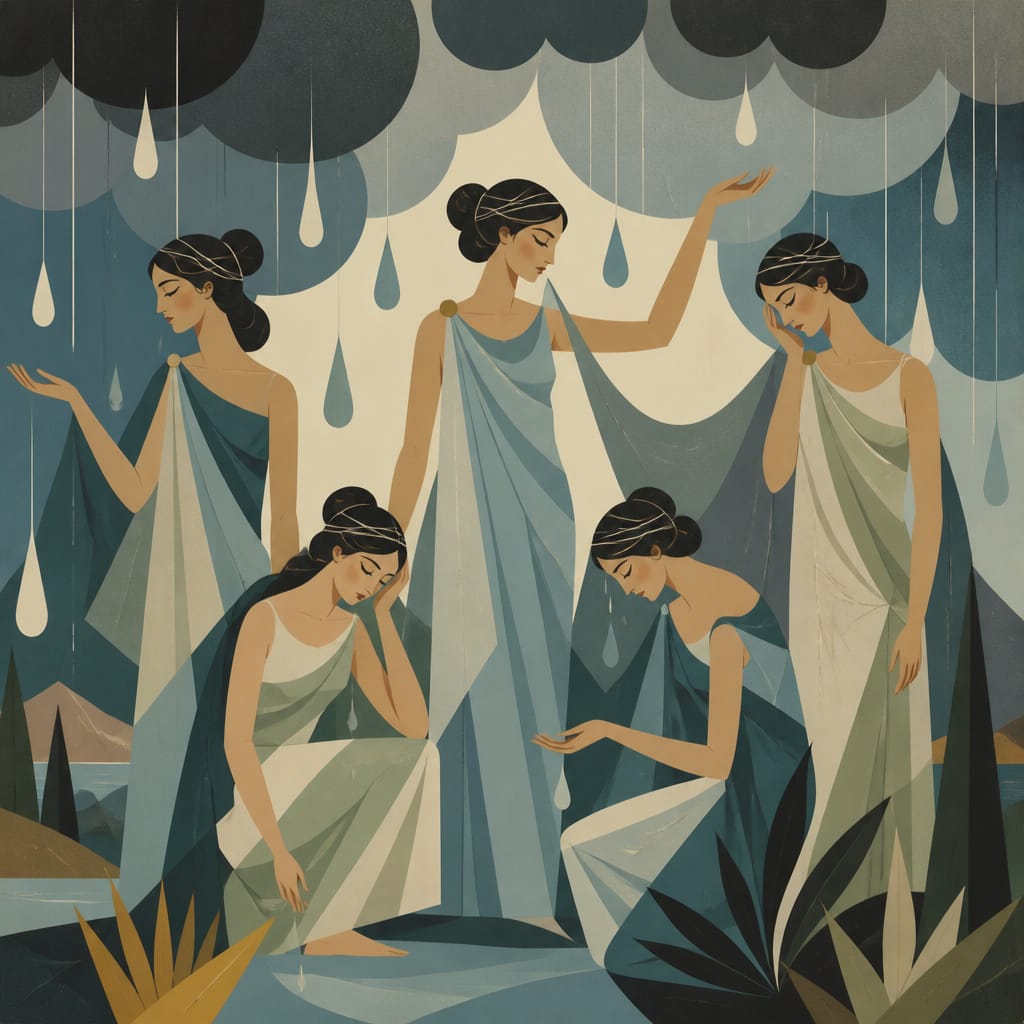
Rain & storm
Nymphs of the rain — their rising brings the wet season, their tears fall as the storms that nourish the earth.
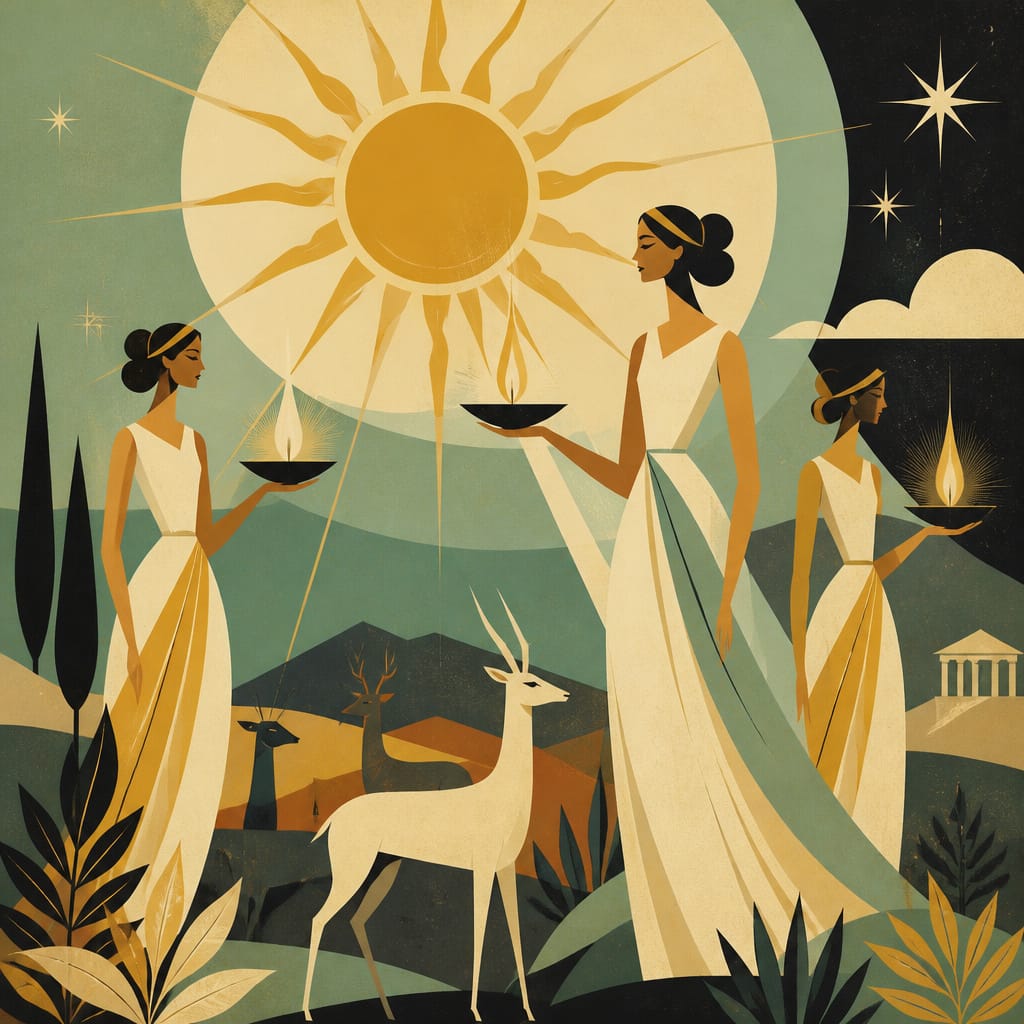
Radiant light
Spirits of brilliant light, attendants of the sun-god Helios. They keep the herds of the dawn and the lamps of heaven.
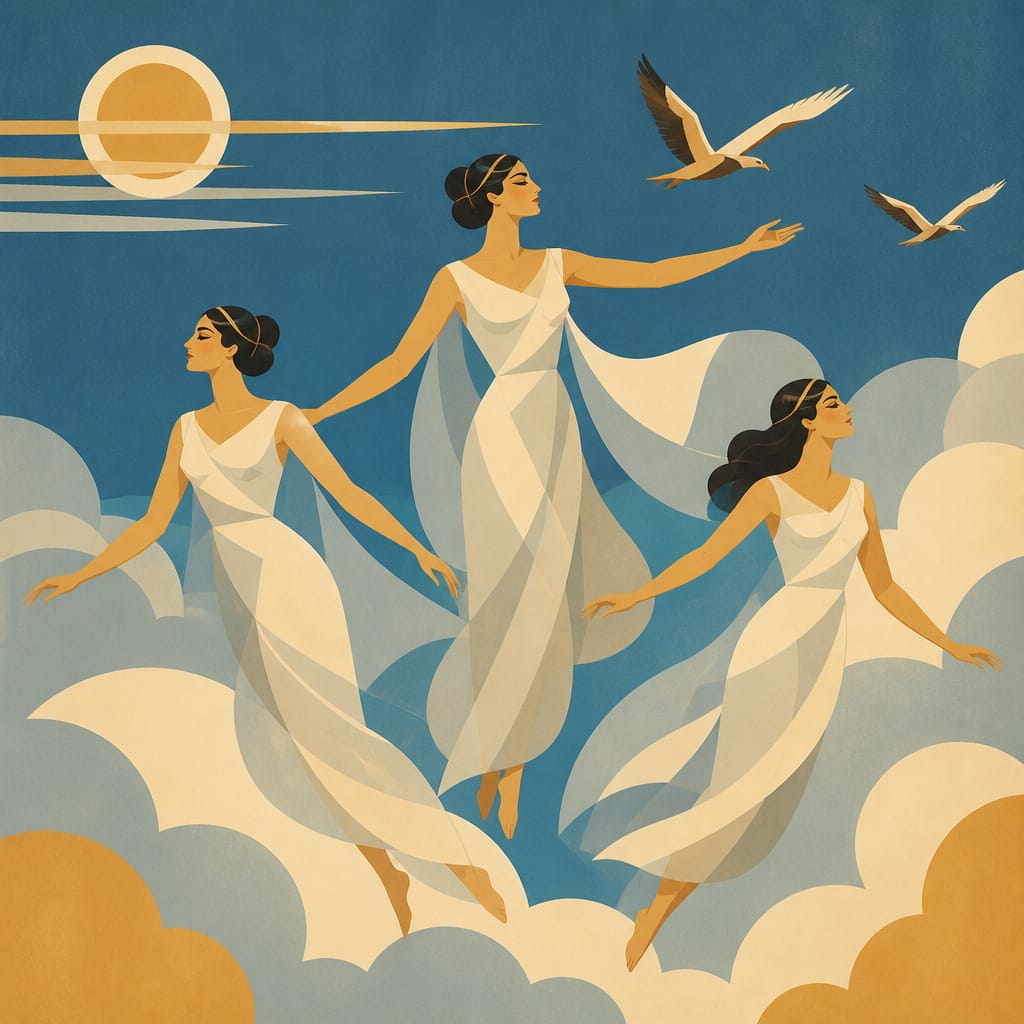
Upper air & sky
Nymphs of the pure upper air, the bright blue dome above the clouds where the gods breathe and the eagles wheel.
A constellation of those remembered in ancient hymn, star-lore, and the devotion of sky-watchers.
EosἨώς
The dawn
The goddess of the dawn, rosy-fingered and saffron-robed, who opens the gates of day for Helios and the morning star.
AstraeaἈστραία
The starry maiden
Virgin goddess of justice and innocence; the last of the immortals to dwell among mortals, she fled to the stars as the constellation Virgo.
HesperaἝσπερα
The evening
The evening star, one of the Hesperides — she brings the golden light that precedes dusk and the first stars.
MaiaΜαῖα
The Pleiades
The eldest and brightest of the seven sisters; mother of Hermes by Zeus, and a mountain nymph who became a star.
ElectraἨλέκτρα
The Pleiades
One of the seven sisters; her name means 'amber' or 'shining', and she grieves the fall of Troy with veiled light.
TaygeteΤαϋγέτη
The Pleiades
An Oread of Mount Taygetos before her ascent; she was pursued by Zeus and took refuge among the stars.
AlcyoneἈλκυόνη
The Pleiades / Halcyon
The kingfisher-nymph; her days of calm upon the winter sea are the halcyon days, when storms hold their breath.
CelaenoΚελαινώ
The Pleiades
The 'dark' sister; her star is dim, yet she holds the ancient thunder and the storm-clouds of the mountain.
SteropeΣτερόπη
The Pleiades
The 'lightning' sister; her star flickers with the flash of distant storms, a spark of heaven in the dark.
MeropeΜερόπη
The Pleiades
The faintest sister, who married the mortal Sisyphus and hides her face in shame among the stars.
AmbrosiaἈμβροσία
The Hyades
One of the rain-nymphs who nursed the infant Dionysos; her name is the immortality of the gods.
DioneΔιώνη
The sky
A celestial goddess associated with the bright sky; sometimes counted among the Titanesses and the mothers of the Aphrodite.
ThyoneΘυώνη
The thundering sky
The divine name of Semele after her apotheosis; she dwells in the sky, intoxicated and thunder-borne.
PhoebeΦοίβη
The moon's light
Though the moon is Selene, Phoebe is the bright, prophetic radiance of the heavens — her name means 'shining'.
NepheleΝεφέλη
The cloud
A cloud-nymph fashioned by Zeus from the form of Hera; she appears in the sky as a phantom and a bringer of rain.
The classical offering to a celestial nymph is given where the sky can receive it — on a rooftop, a hilltop, or beneath the open stars.
The celestial nymphs are distant but not indifferent. The sky is their sacred precinct; to misuse it is to offend the oldest order.
"Daughters of the sky, who dwell among the stars,
who open the gates of dusk and dawn,
who ride the clouds and send the gentle rain —
come, bright ones, with clear and shining heart,
and bless the one who watches the night with reverence."
After the Orphic Hymn to the Nymphs (No. 51)