Named in Myth
Anthousai Known by Name
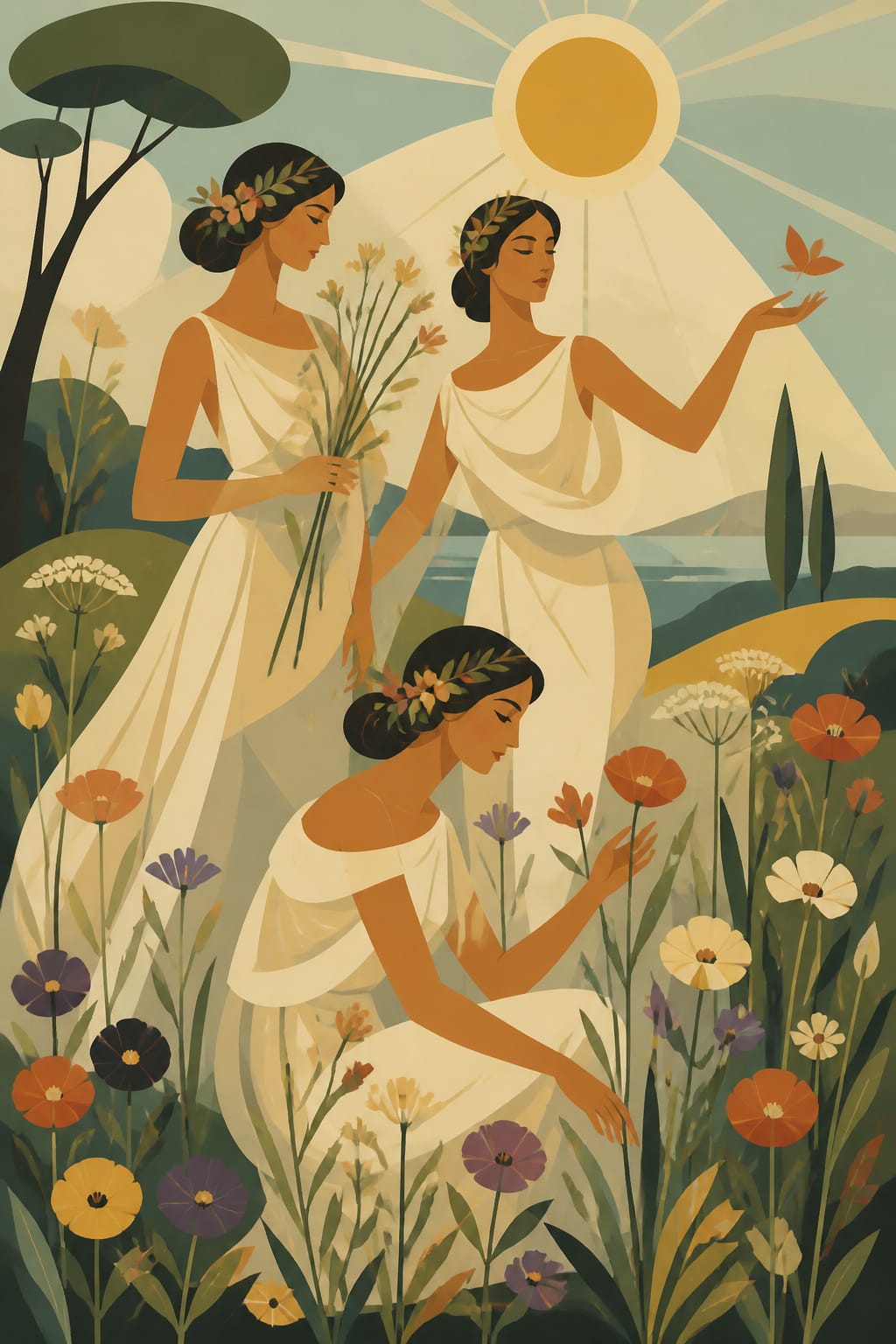
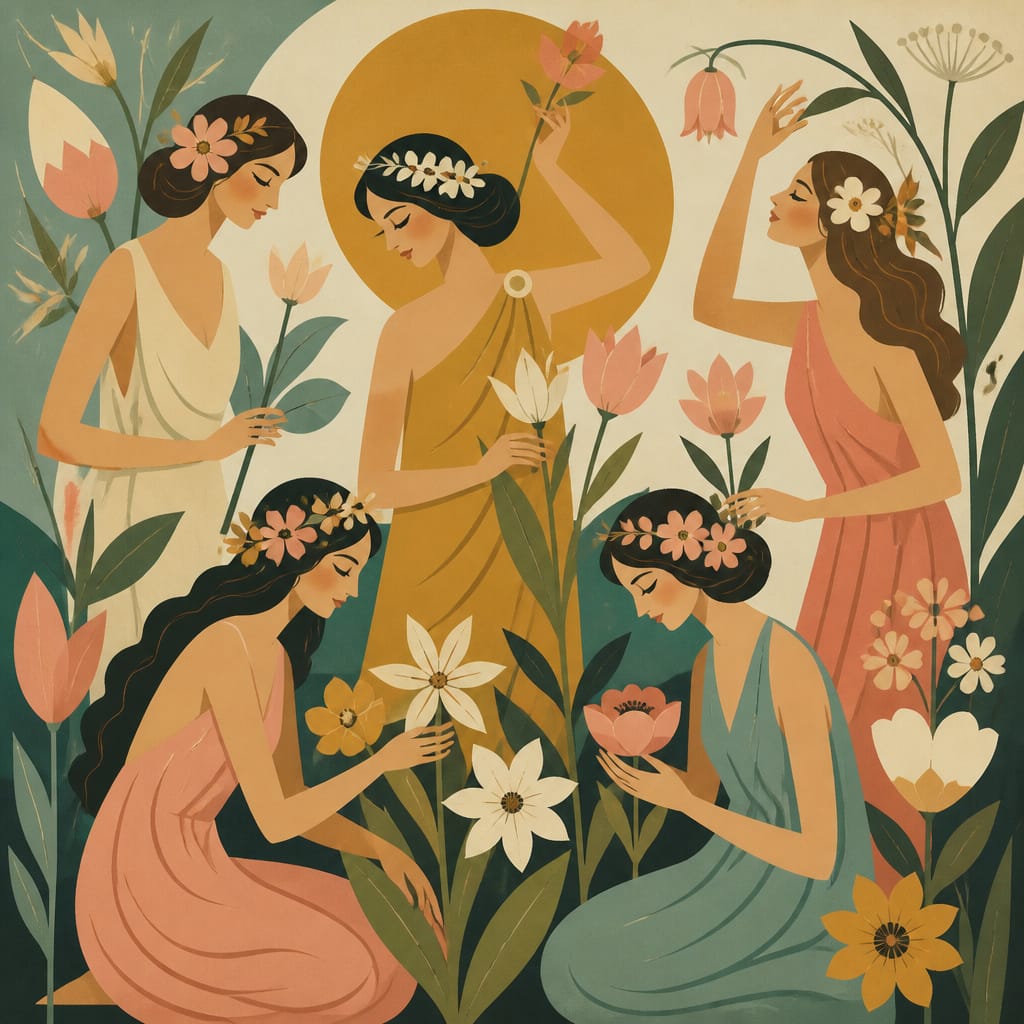
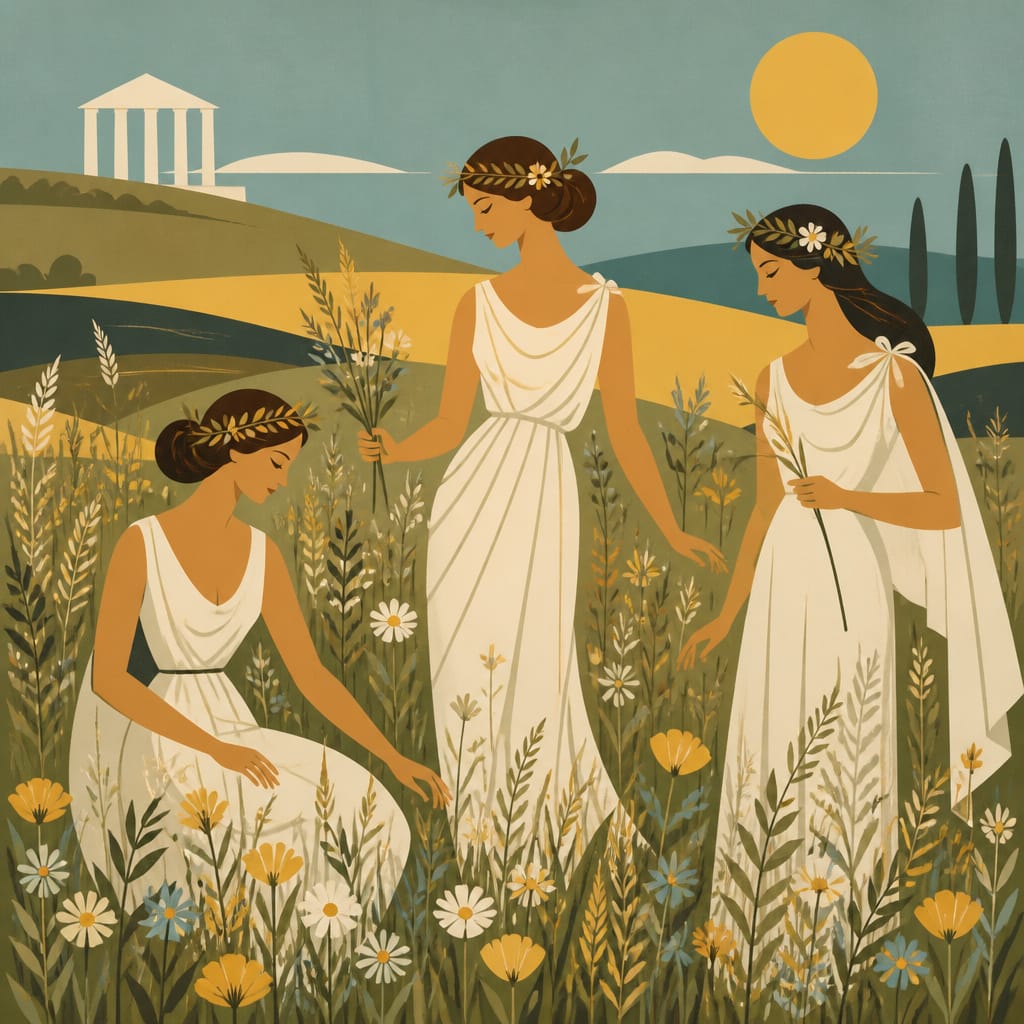
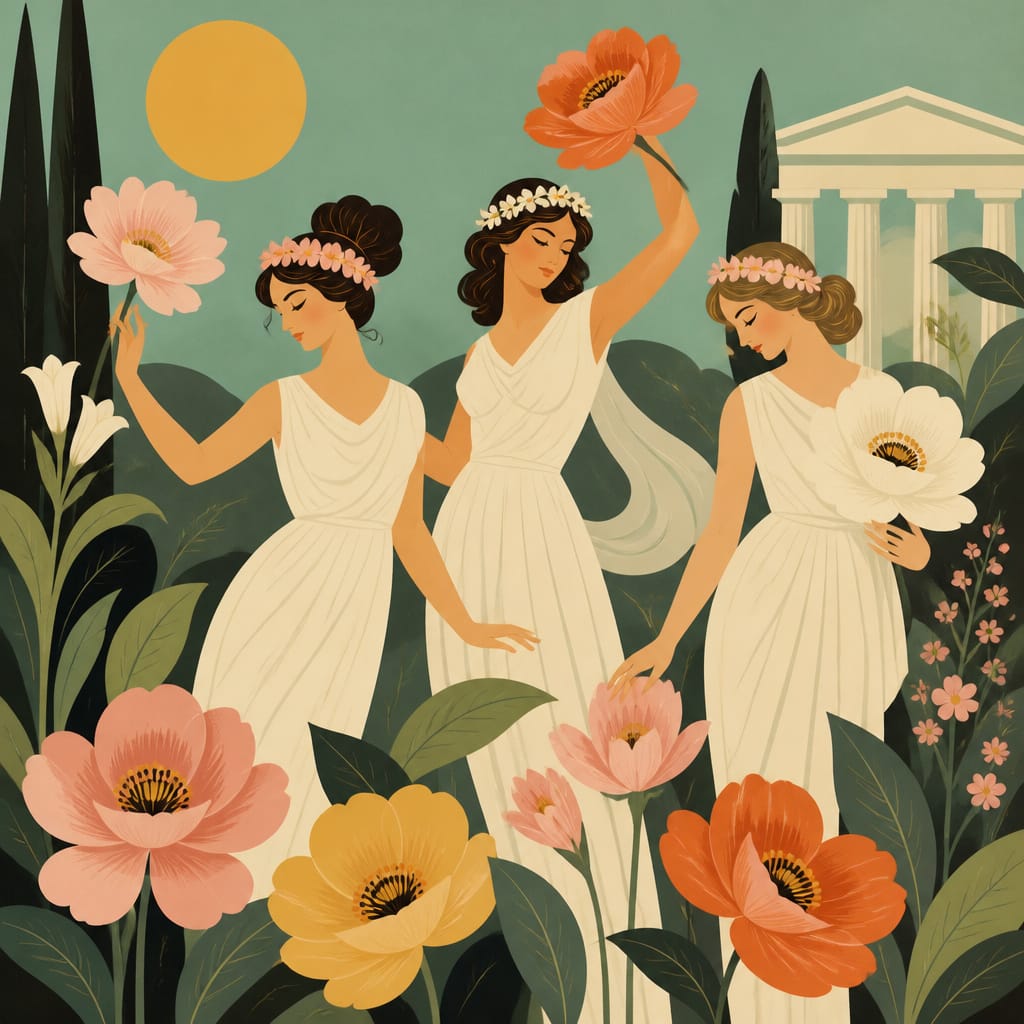
A garland from the countless flower spirits — each remembered by the bloom she guarded, the meadow she danced in, or the myth that unfolded where her petals fell.
ChlorisΧλωρίς
All flowers and spring
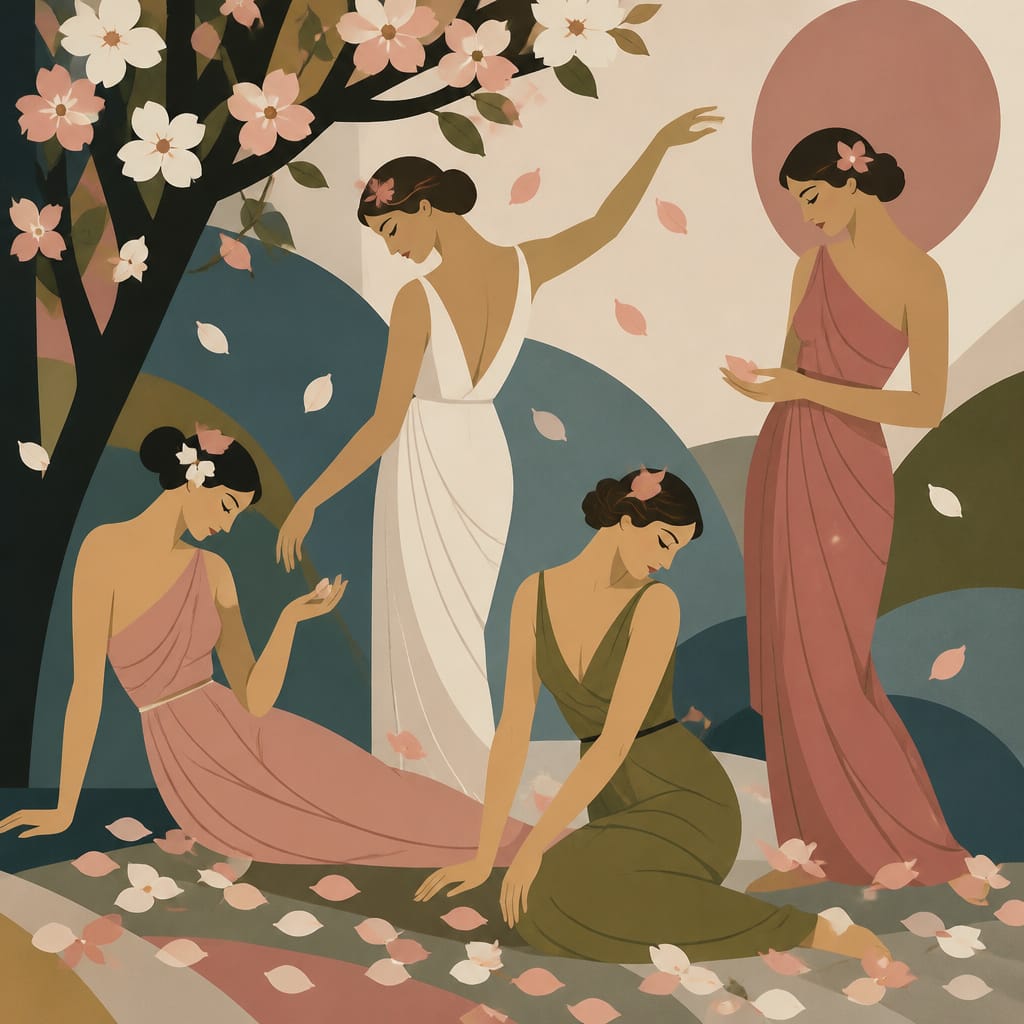
The most renowned of the flower spirits — goddess of flowers and spring, who transforms into Flora in Roman lore. She ushers in the season of bloom, turning the world from winter grey to spring colour with a breath.
AntheiaἈνθεία
Blossoms and gardens
One of the Kharites and a goddess of flowers and blossoms. Her name is the root of 'anthology' — a gathering of flowers. She walks the gardens of the gods, tending what mortals only dream of.
From rhodon, the rose, and anthos, the flower — she is the rose-nymph, spirit of the bloom that symbolises love and secrecy. Her petals are the veil between the mortal and the divine.
AnemoneἈνεμώνη
Windflowers and mourning
The wind-flower nymph — born from Aphrodite's tears for Adonis. She is the nymph of grief made beautiful, of love that outlasts death, of the blossom that opens only to the wind.
HyakinthosὙάκινθος
The hyacinth
Though Hyakinthos was a youth beloved of Apollo, the flower that sprang from his blood gave rise to hyacinth nymphs — spirits of the fragrant blue bloom that marks the place where beauty and tragedy meet.
NarkissosΝάρκισσος
The narcissus
From the youth who loved his own reflection, the narcissus flower and its nymphs embody the peril and beauty of self-love. They bloom by still water, where the surface holds a world within a world.
IrisἾρις
The rainbow flower
The iris flower takes its name from the rainbow messenger, and its nymphs carry messages between realms — from meadow to Olympus, from dream to waking. They bridge the worlds on wings of colour.
LeimoneΛειμώνη
The sacred meadow
A nymph of the flower-filled pasture, whose name is the meadow itself. She was beloved by the god Dionysos, and her realm was the wild place where vine and flower intertwined.
AdonisἌδωνις
The anemone and rose
While Adonis is a god, the flowers of his death and rebirth — the anemone and the blood-red rose — are tended by Anthousai who honour the cycle of decay and return that governs all blooms.
KalykeΚαλύκη
The flower-cup
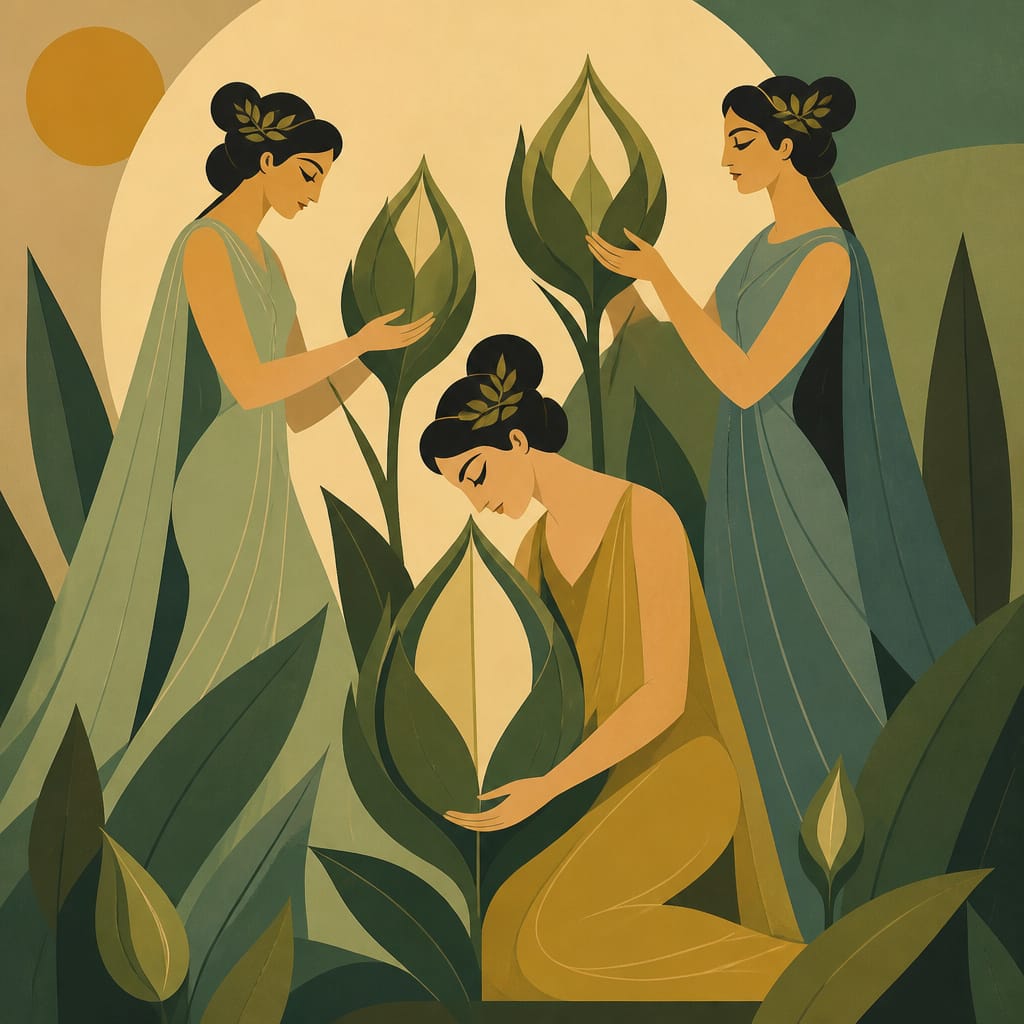
A nymph whose very name means 'bud' or 'calyx' — she is the spirit of the unopened flower, the potential before the reveal, the green secret that holds all colour within it.
SyrinxΣῦριγξ
The reeds and river-flowers
The nymph who, to escape Pan's pursuit, was transformed into reeds — from which the syrinx, the pan-pipe, was made. The river-blooms that grow from her memory sing when the wind passes through them.
HeliadesἩλιάδες
The amber and poplar
Though best known as sun-nymphs, the Heliades wept amber tears that became the tears of the poplar tree — and from their grief, flower-nymphs of the poplar's delicate bloom were born.
LotosΛωτός
The lotus flower
The nymph of the lotus — the flower of forgetting and of dreams. She offers the fruit that makes men lose their longing for home, and the blossom that opens only to the sun's first touch.
PitysΠίτυς
The pine and its cones
A nymph transformed into the pine tree, whose cones and tender new growth are tended by Anthousai who know that even the evergreen has its season of bloom.
AmaryllisἈμαρυλλίς
The shepherd's bloom
From the shepherdess who pierced her heart to win love, the amaryllis flower and its nymph embody the sacrifice that brings forth beauty — the blood that waters the bulb.
GalantheΓαλάνθη
The milk-white bloom
The nymph who, transformed into the galanthus — the snowdrop — braves the last snows of winter. She is the first Anthousa of the year, the flower that promises spring while winter still holds sway.